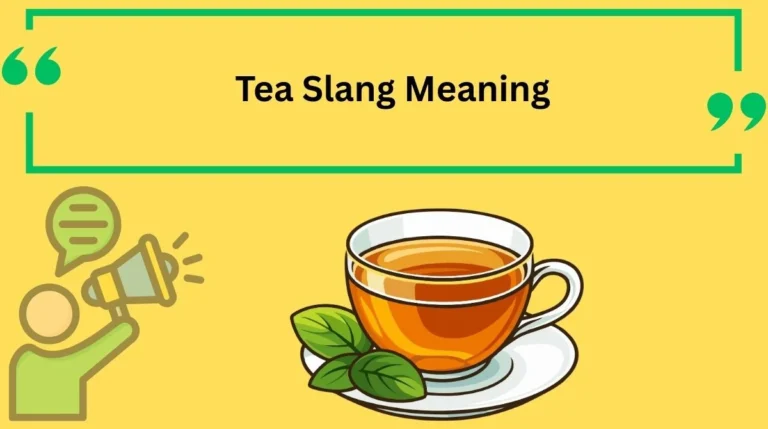
Slang evolves faster than your TikTok For You Page. Words that were cool last month can feel ancient today — and “tea” is one of those terms that grew from simple gossip fuel to a full‑on digital culture staple.
You might see it trending in TikTok captions, buzzing in Discord servers, or popping up in Instagram comments. But what does tea slang meaning actually point to in 2026?
It’s not just about spilling secrets anymore — it’s a social signal, identity move, and cultural vibe all at once.
⭐ ULTRA FEATURED SNIPPET BLOCK ⭐
What does tea slang mean in slang?
→ Tea means juicy info, gossip, or truth that people want to hear. It’s used when someone shares something interesting or surprising about someone or something.
Quick Meaning Points:
• Tone: Mostly positive (sometimes spicy)
• Who uses it most: Gen Z + online creators
• Where used most: TikTok, Discord, Instagram
• Example sentence: “Spill the tea — what actually happened at the party?”
Core Meaning Explained
In modern digital culture, tea is slang for news, gossip, or interesting info that’s either entertaining or revealing. Think of it as truth with personality — the kind of real talk you’d rush to share with your close friends.
When someone says “Give me the tea!” they aren’t thirsty for a drink — they want the inside scoop. Over time this slang has gone beyond simple gossip. People use tea to describe opinions, drama, personal experiences, or facts that carry emotional weight or social relevance.
So when you search tea slang meaning in text or tea meaning on TikTok, understand that it’s about realness — not just rumors.
Origin + Evolution Timeline
Early Internet Roots
The idea of gossip as a “drink” has roots in drag culture and Black queer communities, where “tea” or “T” was used to describe truth — much like “truth serum.” This was before mainstream internet slang caught on.
Meme Spread Phase
In the 2010s, Tumblr and early Twitter popularized “spilling the tea” as a humorous way to talk about drama. Memes used tea icons, kettle GIFs, and tea emojis to show someone was about to drop something juicy.
Mainstream Adoption
By the early 2020s, influencers and YouTubers were using tea in titles and catchphrases like “We spilled all the tea about prom!” and “Tea time with…”. That made the term searchable and clickable.
2026 Current Usage
Now in 2026, tea is both a conversational staple and a context clue. Whether it’s a TikTok reveal, Twitch chat reaction, or Insta story confession, “tea” signals that what follows is worth paying attention to.
How Gen Z Uses Tea Today (2026 Focus)
TikTok:
Creators ask followers for tea about trends, or spill tea about pop culture moments with dramatic sound edits.
Discord:
In group chats, people ping 🍵 when someone’s about to drop a revelation.
Instagram Comments:
Comments like “Omg tea!” or “Spill the tea sis” show excitement or anticipation.
Text Messages:
Friends casually text “Got tea?” to ask if something interesting happened today.
Real Chat Style Examples
Friend 1: Yo, heard what happened at lunch?
Friend 2: Spill the tea 🍵
Friend 1: Apparently she left the squad chat?
Friend 2: Oh that’s big tea.
Friend 1: He said he’s moving next week.
Friend 2: Wow, real tea.
Friend 1: TikTok took down that trend again.
Friend 2: Tea alert lol.
Friend 1: I saw you and Jamie?
Friend 2: Girl, no tea yet 😅
Similar Slang Comparison Section
Tea vs Juice
Both can mean gossip, but juice can be more playful or positive.
Tea vs Spill
Spill is the action of revealing info, while tea is the info itself.
Tea vs No Cap
No cap means no lie, while tea is the juicy fact.
Tea vs Facts
Facts confirms truth; tea carries vibe and drama.
Tea vs Receipts
Receipts are proof (screenshots or evidence). Tea is what’s being shared.
Each of these helps show subtle differences in modern slang usage and why tea is uniquely expressive.
Psychological + Social Meaning
Why do people use tea so much? It boils down to connection and identity.
Slang isn’t just words — it’s a social signal that says, “I belong here.” When someone uses tea, they are showing they’re part of the group, understand the culture, and enjoy conversation with layers of meaning. It builds social currency — especially online.
This behavior reflects how humans bond over shared experiences. When someone shares tea, it invites comment, reaction, and deeper engagement — key elements of social validation in digital spaces.
Also, tea often carries emotional tone, meaning people use it to express interest, excitement, surprise, or judgment without saying it outright.
When Not To Use This Slang
Using tea can be fun — but it’s not always appropriate.
Professional Situations
Boss emails, client communication, and resumes don’t need “tea.” It can look unprofessional.
Older Audience
Not everyone knows modern slang, and misusing it can cause confusion.
Formal Writing
Academic papers and news reports should avoid casual slang unless clearly explained.
Is This Slang Still Trending in 2026?
Yes. In 2026, tea remains connected to digital culture. As language trends evolve, tea still persists because it’s simple, expressive, and versatile. Even as new slang emerges (like drip or ghost kitchen vibes), tea remains a reliable term — especially in meme communication and social engagement.
Future prediction? Expect tea to stay as a baseline for revealing content, while new modifiers (think emojis, sound bytes, or AI‑generated slang inflections) build fresh layers on top.
Pro Tips to Use Naturally
• Use tea when sharing interesting information, not just any random detail.
• Pair it with reactions like 😭, 🤯, 👀 to amp mood.
• In captions, use tea to increase engagement.
• Don’t force it where it feels out of place.
• Follow up with context — readers need to know what the tea actually is.
Common Mistakes Section
- Using tea for bland or uninteresting info.
- Overusing it in professional or formal text.
- Assuming everyone understands it.
- Mixing it with unrelated slang incorrectly.
- Forgetting context when asking for tea.
Related Slang Words (Mini Glossary)
• No Cap: No lie, for real.
• Receipts: Evidence or proof.
• Juice: Gossip or interest.
• Sus: Suspicious or questionable.
• Flex: Show off.
• Mood: Relatable feeling.
• Vibe Check: Assessing mood or energy.
• Ghost: To disappear from communication.
• Drip: Style or swag.
• Clout: Influence or fame.
FAQ Section
What does tea mean in slang?
Tea means gossip, news, or interesting info people want to know about.
Where is tea most used online?
Tea is most popular on TikTok, Discord, and Instagram.
Is tea positive or negative slang?
Usually neutral to positive, but it can be spicy depending on context.
How do I use tea in a sentence?
“Spill the tea on the new trend!” or “That’s some hot tea.”
Can adults use tea slang too?
Yes, but it works best in informal or casual settings.
Power Conclusion
Slang like tea is a snapshot of how language evolves with culture, technology, and social habits. It’s not just a buzzword — it’s a vibe, a connector, and a way to share what matters in bite‑size digital moments. Share the tea, drop the truth, and use this slang like a pro.